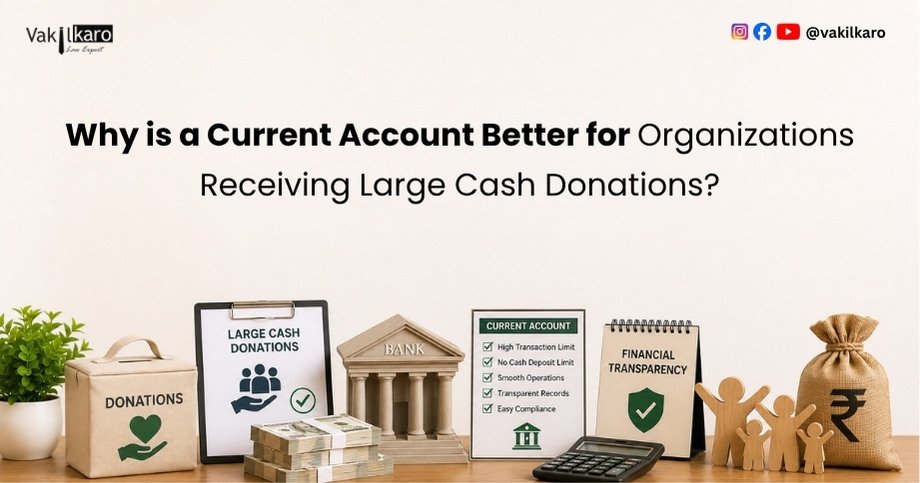
Organizations receiving large cash donations must choose a current account over a savings account to ensure regulatory compliance, transparent fund management, and smooth audit processes. Current accounts offer unlimited transactions, easy documentation, and clear segregation of funds—essential for 12A, 80G, NGO Darpan, and MSME compliance. Savings accounts, with transaction limits and personal-use features, can lead to tax scrutiny, audit issues, and loss of donor trust. By maintaining a professional current account, NGOs and Section 8 Companies strengthen their credibility with donors, simplify grant applications, and safeguard their long-term financial health and operational growth.
Key Takeaways
- Organizations receiving large cash donations must choose a current account over a savings account to ensure regulatory compliance, transparent fund management, and smooth audit processes.
- Current Account is Essential for Organizations Handling Large Cash Donations For organizations like NGOs, Section 8 Companies, and social enterprises in India, effective financial management is critical right from the start.
- In this blog, we will explore why a current account is the better choice for organizations expecting substantial cash flows, how it supports tax and regulatory compliance, and the best practices NGOs and Section 8 Companies should follow for sustainable financial governance.
- Understanding the Basics: Current Account vs Savings Account Before diving deeper, it’s important to understand the fundamental difference: Thus, for organizations, especially NGOs receiving regular cash donations, a current account ensures smooth financial operations without regulatory or operational disruptions.
- Why Organizations Receiving Large Cash Donations Must Prefer a Current Account?
Current Account is Essential for Organizations Handling Large Cash Donations
For organizations like NGOs, Section 8 Companies, and social enterprises in India, effective financial management is critical right from the start. One of the most important early decisions is choosing the right type of bank account. Organizations that expect to receive significant cash donations must prioritize opening a current account over a savings account. This choice is crucial not only for operational convenience but also for meeting regulatory standards, facilitating audits, and building long-term credibility with donors and government authorities.
Unlike savings accounts, which limit the number of transactions and are primarily intended for personal use, current accounts allow unlimited deposits and withdrawals without penalties. This flexibility becomes essential when managing frequent cash flows from fundraising events, community initiatives, or donation drives. Moreover, Indian tax regulations require close monitoring of cash deposits—especially those exceeding ₹50 lakh annually or ₹2 lakh in a single day—making transparent banking practices even more important.
Organizations seeking 12A and 80G registrations for tax exemptions, as well as those registering with platforms like NGO Darpan under NITI Aayog or applying for MSME benefits, must show clean, professional financial records. Operating through a current account ensures separate management of organizational and personal funds, simplifying audits, and strengthening eligibility for grants and government collaborations.
Furthermore, maintaining a current account significantly boosts donor trust. Corporate donors, particularly those contributing under CSR mandates, prefer organizations that demonstrate financial transparency. Clean documentation, timely reconciliations, and proper tracking of donations enhance the organization’s reputation.
In conclusion, choosing a current account is not just a best practice—it is a strategic step that protects the organization from tax scrutiny, strengthens its compliance status, and establishes a solid foundation for growth, impact, and credibility in the social sector.
In India, when an organization is established—whether through NGO registration, Section 8 Company registration, or MSME registration for social enterprises—strong financial management becomes a critical pillar of long-term success. Financial transparency, regulatory compliance, and structured record-keeping are not optional; they are mandatory for building trust with donors, securing government approvals, and maintaining tax-exempt status.
One of the earliest and most crucial financial decisions organizations must make is choosing the right type of bank account. This decision directly impacts their ability to manage donations, maintain clean financial records, and withstand regulatory scrutiny. For organizations that expect to receive large volumes of cash donations—whether through fundraising events, community campaigns, or regular contributions—the need for careful cash handling becomes even more important.
In such cases, opting for a current account over a savings account is not just advisable, it is essential. A current account provides unlimited transaction capabilities, supports transparent cash handling, and aligns with regulatory requirements enforced by authorities such as the Income Tax Department and bodies like NITI Aayog, which oversees NGO Darpan registration. Savings accounts, by contrast, impose transaction limits and are tailored for personal use, making them unsuitable for organizations with significant and frequent cash inflows.
Moreover, organizations aiming for 12A and 80G registrations—both critical for obtaining income tax exemptions and offering donors tax benefits—must maintain financial systems that demonstrate clear fund management and compliance with government norms. Choosing the right account type from the start lays the groundwork for smooth audits, easy grant applications, and enhanced credibility with corporate CSR partners, government agencies, and institutional donors.
In this blog, we will explore why a current account is the better choice for organizations expecting substantial cash flows, how it supports tax and regulatory compliance, and the best practices NGOs and Section 8 Companies should follow for sustainable financial governance.
Understanding the Basics: Current Account vs Savings Account
Before diving deeper, it’s important to understand the fundamental difference:
Thus, for organizations, especially NGOs receiving regular cash donations, a current account ensures smooth financial operations without regulatory or operational disruptions.
Why Organizations Receiving Large Cash Donations Must Prefer a Current Account?
Unlimited Transactions and Cash Handling
Organizations engaged in fundraising events, community drives, or religious activities often receive cash donations in large volumes. A savings account imposes transaction limits, whereas a current account allows:
- Unlimited cash deposits and withdrawals
- No penalties for multiple transactions
- Seamless cash management
Especially after NGO registration or Section 8 Company registration, having a current account ensures uninterrupted financial operations.
Regulatory Compliance with Income Tax Laws
As per Indian Income Tax Rules:
- Cash deposits over ₹50 lakh annually in a current account are reported to authorities via SFT filings.
- PAN details must be quoted for deposits over ₹2 lakh in a single day.
Organizations aiming for 12A and 80G registration must ensure clear, compliant banking trails. A current account:
- Simplifies PAN collection for large donors
- Helps document transactions transparently
- Avoids scrutiny by tax authorities
Mandatory for NGO Darpan and NITI Aayog Registrations
When registering on NGO Darpan, managed by NITI Aayog, NGOs must:
- Provide valid, operational bank account details.
- Show evidence of transparent fund management.
Having a current account is a strong signal of professionalism and financial seriousness. Many government grants and CSR collaborations require an NGO Darpan registration linked to an active current account.
Facilitates MSME Registration Compliance
Social enterprises and NGOs registered under MSME registration are expected to:
- Maintain clear business-like accounts.
- Submit clean bank statements during audits.
A current account simplifies fund tracking for multiple projects, grants, and government schemes, strengthening eligibility for MSME benefits.
Streamlined Audit Process
Annual audits, necessary after:
- NGO registration
- Section 8 Company incorporation
- 12A/80G approval
...require clean fund trails.
A current account:
- Segregates personal and organizational funds
- Tracks income and expenses clearly
- Facilitates hassle-free auditing
Savings accounts, due to personal features, can complicate audits, leading to unnecessary queries or rejection of tax benefits.
Building Donor Trust and Credibility
Donors — especially corporates under CSR (Corporate Social Responsibility) mandates — expect:
- Transparent banking practices
- Proper receipts and fund tracking
- Separation of operational and personal finances
An organization operating through a current account:
- Looks credible
- Builds donor confidence
- Increases chances of receiving recurring grants
In contrast, using a savings account might raise red flags during due diligence.
Practical Scenarios: How Current Accounts Support Cash Donations?
Best Practices for NGOs Managing Cash Through Current Accounts
Document Every Cash Donation
- Issue receipts immediately
- Collect donor PAN for cash donations over ₹2 lakh
Set Cash Handling Policies
- Daily cash deposit limits
- Designated authorized signatories
- Cash reconciliations within 24-48 hours
Board Approvals and Financial Governance
- Pass board resolutions for account operations
- Assign responsibilities clearly among staff
Maintain Separate Ledgers
- Differentiate between corpus funds, restricted donations, operational income
- Record bank deposits separately for easy audit trails
Timely Bank Reconciliation
- Reconcile bank books monthly
- Correct errors immediately
Risks of Using Savings Accounts for Large Donations
How a Current Account Supports Section 8 Company Requirements?
Section 8 Companies under the Companies Act must:
- Maintain separate current accounts
- Disclose bank accounts annually to the Registrar of Companies (ROC)
- Maintain clear financial records
Failing to do so can result in penalties or even license cancellation under Company Law.
Thus, after Section 8 Company registration, opening a current account becomes mandatory.
MSME-Registered NGOs: Why Current Accounts Matter?
Organizations registered under MSME:
- Apply for government subsidies
- Participate in credit schemes
- Seek priority funding
Banks and government agencies assess financial hygiene through current account records. Transparent handling of cash inflows (like donations or project payments) boosts MSME eligibility and access to support.
Practical Example: NGO Using Current Account Efficiently
An NGO registered under Section 8 and listed on NGO Darpan organized a health camp and collected ₹70 lakh over 6 months.
They:
- Deposited all donations daily into their current account
- Issued receipts for every donation
- Reconciled cash daily and updated records
- Declared cash receipts during ROC filings
- Used digital payments where possible
Result:
- No income tax scrutiny triggered
- 12A and 80G benefits renewed without issues
- Received additional grants due to strong compliance
Conclusion: Current Account is the Financial Backbone for Growing NGOs
Choosing a current account is not just a banking decision — it’s a compliance strategy for any NGO or Section 8 Company aiming for long-term impact.
Organizations receiving large cash donations must prioritize opening and operating a current account immediately after:
- NGO registration
- Section 8 Company registration
- 12A and 80G registration
- NGO Darpan registration
- MSME registration
This ensures:
- Unlimited, hassle-free transactions
- Tax compliance and audit readiness
- Enhanced credibility with donors and government agencies
- Long-term financial stability
By maintaining clean financial practices through a current account, NGOs can safeguard their mission, build trust, and maximize their contribution to social change.
Official External Resources
Use these primary/official sources to verify rules, forms, fees, timelines and regulatory updates before publication.
Frequently asked questions
Why is a Current Account Better for Organizations Receiving Large Cash Donations?+
Organizations receiving large cash donations must choose a current account over a savings account to ensure regulatory compliance, transparent fund management, and smooth audit processes. Current Account is Essential for Organizations Handling Large Cash Donations For organizations like NGOs, Section 8 Companies, and social enterprises in India, effective financial management is critical right from the start.
