Opening the right bank account is a crucial step after NGO registration, Section 8 Company registration, or MSME registration. NGOs often ask: Should we choose a savings or current account? Understanding this distinction is vital for ensuring regulatory compliance, eligibility for 12A and 80G registration, and smooth operations, including NGO Darpan registration with NITI Aayog. This blog explores in-depth the differences between savings and current accounts, their impact on NGO credibility, funding, legal compliance, and financial management, helping NGOs make the right choice for long-term success.
Key Takeaways
- This blog explores in-depth the differences between savings and current accounts, their impact on NGO credibility, funding, legal compliance, and financial management, helping NGOs make the right choice for long-term success.
- Choosing the Right Bank Account for NGOs: Savings vs Current Account When establishing and operating an NGO in India, whether through NGO registration, Section 8 Company registration, or even MSME registration, one important decision that must be made early on is selecting the right type of bank account.
- Among the earliest questions faced by founders is: Should an NGO open a savings account or a current account?
- Understanding the Basics Before an NGO can decide on the right type of bank account, it is important to first understand the fundamental differences between a Savings Account and a Current Account.
- Conclusion Choosing between a savings account and a current account might seem minor at the beginning of an NGO's journey, but it has profound implications on operational effectiveness, regulatory compliance, fundraising success, and long-term growth.
Choosing the Right Bank Account for NGOs: Savings vs Current Account
When establishing and operating an NGO in India, whether through NGO registration, Section 8 Company registration, or even MSME registration, one important decision that must be made early on is selecting the right type of bank account. A common question for new NGOs is whether to opt for a savings account or a current account. Understanding this choice is essential because it impacts the organization’s regulatory compliance, operational efficiency, and eligibility for critical benefits like 12A and 80G registration.
Savings accounts are traditionally designed for individuals, offering modest interest rates and limiting the number of free transactions. While small or newly formed NGOs may temporarily manage with a savings account, it is not ideal for NGOs aiming for growth. Savings accounts impose restrictions that can complicate financial management as the number of donors, grants, and transactions increase. Furthermore, using a savings account may undermine an NGO’s credibility with major donors, government bodies, and CSR partners.
In contrast, a current account is specifically structured for entities like NGOs, companies, and trusts. It allows unlimited transactions, supports high-volume financial activity, and reinforces a professional image. For NGOs planning to secure 12A and 80G certification, register with NGO Darpan (managed by NITI Aayog), or apply for government grants, maintaining a current account is often necessary. It enables smooth fund management, strengthens audit compliance, and improves transparency—key factors for building donor trust and operational credibility.
In conclusion, while a savings account might suffice initially for very small NGOs, a current account is the proper foundation for NGOs committed to regulatory excellence, financial transparency, and sustainable growth.
Starting and managing an NGO in India involves a series of vital decisions that impact its operational efficiency, legal compliance, and long-term success. Whether an NGO is formed through NGO registration, structured under Section 8 Company registration, or later formalized through MSME registration to access government schemes, one critical operational step remains constant—opening a bank account.
Among the earliest questions faced by founders is: Should an NGO open a savings account or a current account? Though it might seem like a routine administrative task, this choice has far-reaching consequences for the organization's financial management, transparency, and credibility. The nature of the bank account chosen can affect the NGO’s ability to maintain regulatory compliance, manage grants and donations efficiently, and qualify for tax exemptions like 12A registration and 80G registration under the Income Tax Act.
Moreover, financial transparency is not only a legal requirement but a strategic advantage when it comes to registering on platforms like NGO Darpan, managed by NITI Aayog. A strong financial foundation enhances an NGO's eligibility for government grants, corporate partnerships under CSR initiatives, and public trust—each essential for sustainability and growth.
In this blog, we will dive deep into the distinctions between savings accounts and current accounts, examining their features, limitations, regulatory expectations, and operational implications for NGOs. We will also highlight best practices that NGOs should adopt to ensure financial discipline, donor confidence, and compliance with legal norms. Whether you are just beginning your NGO journey or planning to expand, understanding the correct banking structure will set the tone for your organization’s future success.
Understanding the Basics
Before an NGO can decide on the right type of bank account, it is important to first understand the fundamental differences between a Savings Account and a Current Account. Although both serve the essential purpose of holding funds, their design, features, and suitability for different users vary significantly, especially when it comes to organizational needs like those of NGOs.
What is a Savings Account?
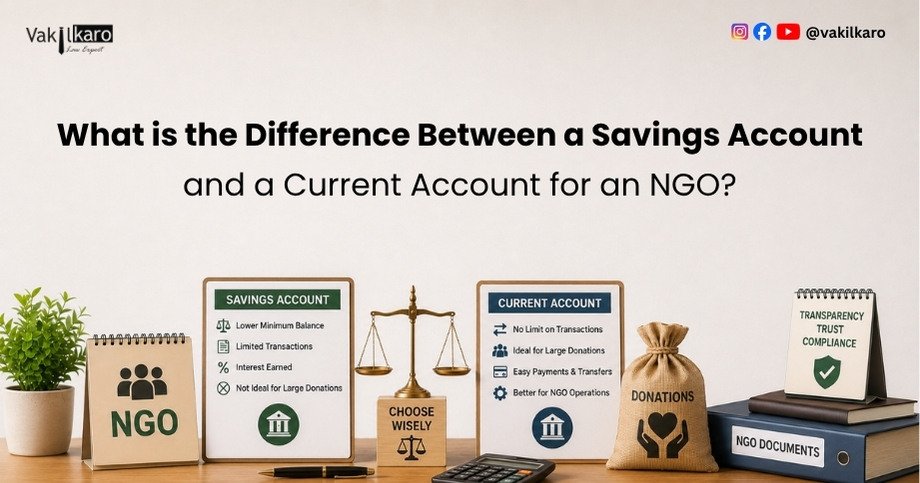
A Savings Account is primarily designed for individuals to deposit, store, and grow their money securely over time. It is meant to encourage a habit of saving and provides a modest amount of interest on the balance maintained in the account. However, savings accounts come with certain operational limitations:
- Limited Transactions: Most banks impose a cap on the number of free transactions allowed per month. Frequent withdrawals, deposits, or fund transfers may incur extra charges.
- Lower Minimum Balance Requirement: Savings accounts usually require a relatively low minimum balance compared to current accounts, making them accessible to individuals.
- Personal Usage Focus: Savings accounts are optimized for personal financial management rather than for handling business-like operational needs.
- Interest Earnings: The primary benefit is earning interest on idle funds, which is typically in the range of 2.5% to 4% per annum, depending on the bank.
For NGOs dealing with high transaction volumes, multiple donations, grants, and project expenditures, the restrictions associated with a savings account can soon become operational hurdles.
What is a Current Account?
A Current Account, by contrast, is specifically structured for organizations such as businesses, companies, societies, trusts, and NGOs. It offers far greater flexibility and operational efficiency, including:
- Unlimited Transactions: NGOs can carry out unlimited deposits, withdrawals, and transfers without worrying about exceeding a transaction limit.
- Minimal or No Interest: Current accounts typically do not offer interest on the deposited amount, as the focus is on facilitating frequent financial activity rather than saving money.
- Higher Minimum Balance: Maintaining a higher minimum balance is often mandatory, reflecting the account's professional use case.
- Business-Focused Usage: A current account supports large, regular financial movements, making it the ideal choice for NGOs involved in multiple projects, grant management, and operational payments.
Choosing a current account from the outset aligns the NGO’s financial structure with regulatory expectations, especially when the organization seeks NGO registration, Section 8 Company registration, or aims to register with NGO Darpan under NITI Aayog.
Differences Between a Savings and Current Account for NGOs
Why Savings Accounts Are Generally Not Ideal for NGOs?
At the very early stages of an NGO’s journey—particularly for small or grassroots-level organizations with limited financial activity—a savings account might seem like a convenient and inexpensive choice. It is easy to open, requires minimal documentation, and offers some interest on the deposited funds. However, as an NGO grows and begins to operate more formally, relying on a savings account quickly becomes impractical and even detrimental. Here's why:
Transaction Restrictions
Savings accounts are primarily intended for personal banking, and banks typically place strict limits on the number of free transactions allowed per month. NGOs, by nature, require frequent financial transactions—receiving donations, disbursing funds for projects, paying vendors, and managing administrative expenses. A savings account can severely disrupt the operational flow if transaction limits are breached, resulting in penalties or account freezes.
Perception Issues
Financial credibility is essential for NGOs, especially those aiming to collaborate with corporate partners, government bodies, or international donors. Operating through a savings account, which is generally reserved for individuals, may signal informality and lack of professionalism. Donors and grant-making agencies often expect NGOs to have dedicated, professionally managed current accounts. Using a personal-type account can harm an NGO’s reputation and weaken its chances of securing critical funding or CSR partnerships.
Compliance Challenges
Applying for important certifications like 12A (tax exemption) and 80G (donor tax deduction) under the Income Tax Act requires demonstrating transparent financial practices. Similarly, platforms like NGO Darpan, operated by NITI Aayog, demand clear, auditable records. Current accounts are better equipped for such compliance needs, offering detailed statements that are easy to audit. Savings accounts, with their mixed-use limitations and less frequent transaction recording, create hurdles during audits and regulatory filings.
Difficulty Managing Grants
As NGOs grow and start receiving larger grants—whether from government bodies, international agencies, or CSR funds—they must showcase professional financial management. Grant agencies often mandate that funds be received and managed through a formal current account. A savings account lacks the operational infrastructure and credibility to handle large, structured grants, creating risks of fund mismanagement, misreporting, or even disqualification from future funding opportunities.
Why NGOs Should Prefer a Current Account?
For any NGO aiming for operational excellence, credibility, and long-term sustainability, maintaining a current account is not just advisable — it is essential. Here’s why NGOs, whether registered under the Companies Act as a Section 8 Company or through any other recognized legal framework, should opt for a current account right from the beginning:
Meets Legal and Regulatory Norms
NGOs incorporated under the Companies Act, 2013 (as Section 8 Companies), the Societies Registration Act, or the Trusts Act are recognized as formal legal entities. These structures are expected to maintain separate, auditable financial records that reflect their operational activities. A current account aligns with the compliance requirements imposed by authorities such as the Income Tax Department, NGO Darpan (under NITI Aayog), and other regulatory bodies. Without a current account, meeting financial transparency standards for government grants and registrations like 12A and 80G becomes difficult.
Supports Unlimited Transactions
NGOs typically engage in a wide range of financial activities — receiving multiple donations, disbursing funds to field operations, paying employees, purchasing materials, and handling administrative expenses. Savings accounts often limit the number of free transactions per month, disrupting workflow and incurring unnecessary fees. In contrast, a current account allows for unlimited transactions, enabling smooth cash flow management critical for daily operations.
Professional Financial Management
Maintaining a current account fosters professionalism in financial practices. It helps NGOs segregate organizational funds from personal finances, maintain accurate books of accounts, and generate clean, audit-ready financial reports. Proper financial management is crucial not only for internal governance but also for securing compliance certifications like 12A and 80G, and for sustaining good standing with tax authorities.
Facilitates MSME Registration Compliance
For NGOs involved in manufacturing, training, healthcare, or service sectors seeking MSME registration benefits, maintaining a current account is indispensable. MSME schemes often require proof of business-like financial management. A professional current account enables seamless financial documentation, eligibility for subsidies, access to government tenders, and funding under MSME support programs.
Boosts Donor Confidence
Donors — whether individual philanthropists, corporate CSR divisions, or government agencies — prefer working with NGOs that exhibit financial discipline and transparency. A current account sends a strong signal of operational seriousness, organizational integrity, and readiness to manage large donations or grants responsibly. It also assures donors that their contributions are being handled through a properly monitored institutional framework rather than informal personal channels.
When a Savings Account Might Be Acceptable?
Although a current account is the preferred and recommended choice for most NGOs, there are certain exceptional situations where operating with a savings account may be acceptable — but only on a temporary and conditional basis.
Newly-formed NGOs, especially micro-NGOs working at the grassroots level with very limited financial activity, might initially find it practical to open a savings account. In the early days, when transaction volumes are low, donations are minimal, and administrative costs are relatively contained, managing with a savings account can seem convenient and cost-effective. Furthermore, some banks may impose higher minimum balance requirements for current accounts, which might be a constraint for very small organizations.
However, NGOs opting to start with a savings account must proceed with caution and must adhere to some critical best practices to avoid future complications:
Plan to Transition to a Current Account as They Grow
Operating with a savings account should be seen only as a short-term solution. As the NGO scales up — attracting more donors, applying for NGO Darpan registration, seeking 12A and 80G registration, or handling larger grants — transitioning to a current account becomes mandatory. Early planning for this transition ensures that the NGO is ready for growth without facing banking-related hurdles later.
Avoid Mixing Personal Transactions
Under no circumstances should personal expenses or private transactions be mixed with organizational funds. Mixing personal and NGO transactions in a savings account can create compliance risks, make auditing difficult, and weaken the credibility of the organization during donor reviews, grant applications, or government inspections.
Maintain Complete Transparency for Audits
Even while operating with a savings account, the NGO must maintain clear and transparent records of every donation received and every expense incurred. Issuing proper donation receipts, keeping invoices for expenses, and maintaining updated ledger entries are essential to satisfy audits — whether for tax purposes or during registration processes like NGO Darpan or during government funding evaluations.
Role of NGO Darpan and NITI Aayog in Banking Compliance
NGO Darpan, maintained by NITI Aayog, requires NGOs to submit their bank account details for registration and future government collaborations. Current account details strengthen the NGO's application because they signify operational seriousness and professional financial management.
NGOs without a current account may face hurdles in getting listed on NGO Darpan, which can impact visibility, funding opportunities, and eligibility for schemes.
Banking Requirements for Section 8 Company Registration
For NGOs completing Section 8 Company registration, opening a current account is practically mandatory to:
- Handle subscription money from initial shareholders.
- Receive donations and grants.
- Disburse project funds.
- Meet reporting requirements under the Companies Act, 2013
Banks typically require:
- Certificate of Incorporation
- PAN Card of the NGO
- Memorandum and Articles of Association
- Board resolution for account opening
- Proof of registered office address
Impact of Banking Choice on 12A and 80G Registration
NGOs applying for 12A (income tax exemption) and 80G (donor tax deduction) registrations are evaluated based on their financial practices. A current account with clear, separate records of income and expenditure strengthens the NGO's case and builds the foundation for clean audits and regulatory approvals.
Savings accounts, with their restrictions and mixed-use risks, are not recommended for organizations serious about achieving tax-exempt status.
Banking Setup for MSME-Registered NGOs
Social enterprises and NGOs eligible for MSME registration must demonstrate:
- Separate business accounts (current accounts).
- Transparent financial management.
- Proper invoice generation and payment tracking.
An MSME-registered NGO looking to benefit from government grants, loans, and subsidies must maintain a current account as part of regulatory best practices.
Practical Tips for NGO Banking Setup
- Select the Right Bank: Choose a bank experienced in handling NGO current accounts.
- Keep Documents Ready: Prepare all necessary documents, including NGO Darpan registration if available.
- Board Resolution: Have a resolution ready authorizing specific signatories.
- Maintain Transparency: Ensure all receipts, grants, and disbursements are documented properly.
- Periodic Reconciliation: Regularly reconcile bank statements with accounting records to prevent discrepancies.
Best Practices for Managing an NGO Current Account
- Use the account strictly for organizational purposes.
- Separate operational expenses from personal expenditures.
- Issue receipts for all donations and grants.
- Maintain updated records for audits.
- Comply with KYC updates required by the bank periodically.
Conclusion
Choosing between a savings account and a current account might seem minor at the beginning of an NGO's journey, but it has profound implications on operational effectiveness, regulatory compliance, fundraising success, and long-term growth.
For any NGO serious about scaling its impact, achieving 12A and 80G registration, getting listed on NGO Darpan managed by NITI Aayog, or completing MSME registration, a Current Account is not just preferable — it is essential.
By opening and maintaining a current account, NGOs build a solid foundation for financial transparency, professional growth, and enhanced credibility among donors, government bodies, and the public.
In short, while a savings account might serve temporary needs at a very early stage, a current account is the gateway to building a compliant, trustworthy, and sustainable nonprofit organization in India.
Official External Resources
Use these primary/official sources to verify rules, forms, fees, timelines and regulatory updates before publication.
Frequently asked questions
What is the Difference Between a Savings Account and a Current Account for an NGO?+
Choosing the Right Bank Account for NGOs: Savings vs Current Account When establishing and operating an NGO in India, whether through NGO registration, Section 8 Company registration, or even MSME registration, one important decision that must be made early on is selecting the right type of bank account. Understanding the Basics Before an NGO can decide on the right type of bank account, it is important to first understand the fundamental differences between a Savings Account and a Current Account.
