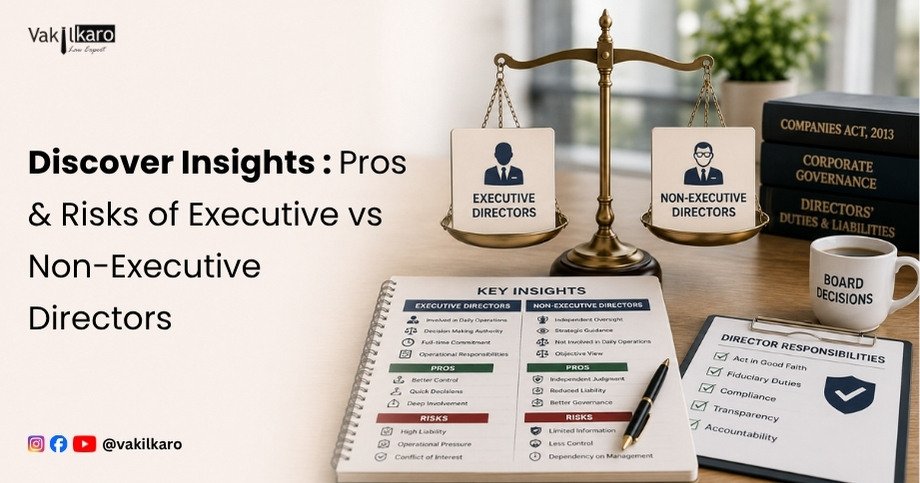
In a Private Limited Company, executive and non-executive directors play pivotal roles in governance, compliance, and strategic decision-making. Executive directors handle daily operations, while non-executive directors offer oversight and objective guidance. Supported by Key Managerial Personnel (KMP), the board ensures financial transparency, regulatory compliance, and corporate accountability. Their composition influences fundraising, risk management, and expansion readiness. By understanding board responsibilities and maintaining proper filings with the Registrar of Companies, businesses strengthen their legal structure, meet Companies Act obligations, and build trust with stakeholders. A balanced, informed board is essential for any company’s long-term success and sustainable growth.
Key Takeaways
- Understanding the Role of Executive and Non-Executive Directors in a Private Limited Company In any Private Limited Company (Pvt Ltd), the Board of Directors plays a central role in ensuring the company’s strategic direction, legal compliance, and effective governance.
- Whether the company is newly incorporated through Private Limited Company registration or already operating as a seasoned corporate entity, identifying the current directors—both executive and non-executive—is fundamental to understanding its leadership structure and decision-making process.
- In summary, knowing who your current executive and non-executive directors are—and understanding their respective responsibilities—is vital to the health, legality, and sustainability of any Pvt Ltd company.
- Executive directors are involved in the day-to-day management of the company, while non-executive directors offer an independent perspective, overseeing and evaluating management’s performance and contributing to critical business decisions.
- Together, Executive and Non-Executive Directors, supported by KMPs, form the leadership and compliance core of a Pvt Ltd company, ensuring that operational efficiency, strategic growth, and statutory responsibilities are balanced and met.
Understanding the Role of Executive and Non-Executive Directors in a Private Limited Company
In any Private Limited Company (Pvt Ltd), the Board of Directors plays a central role in ensuring the company’s strategic direction, legal compliance, and effective governance. Whether the company is newly incorporated through Private Limited Company registration or already operating as a seasoned corporate entity, identifying the current directors—both executive and non-executive—is fundamental to understanding its leadership structure and decision-making process.
Upon company registration, and once the Certificate of Incorporation is granted by the Registrar of Companies (ROC), the company becomes a Separate Legal Entity with Limited Liability. While shareholders hold ownership—via equity or preference shares—it is the directors who are entrusted with managing daily operations and long-term strategies, in accordance with the Companies Act and the company’s governing documents like the Articles of Association (AOA) and Memorandum of Association (MOA).
Executive directors, including the Managing Director, are directly involved in operational and managerial decisions. In contrast, non-executive directors serve a supervisory role, offering strategic input while maintaining independence from day-to-day management. Both types of directors are essential for sound corporate governance.
To support the board, Key Managerial Personnel (KMP) such as the Company Secretary and Chief Financial Officer (CFO) assist in ensuring that the company meets its compliance obligations. They manage filings, maintain the company’s Director Identification Numbers (DINs), and uphold secretarial standards.
The effectiveness of the board directly influences investor confidence, successful fundraising, and long-term business scalability. Their role extends into areas like risk management, statutory audits, business expansion, and alignment with government initiatives like Ease of Doing Business.
In summary, knowing who your current executive and non-executive directors are—and understanding their respective responsibilities—is vital to the health, legality, and sustainability of any Pvt Ltd company.
In the evolving corporate environment, the structure and composition of a company’s leadership can directly influence its success, legal compliance, and long-term sustainability. For a Private Limited Company (Pvt Ltd), the Board of Directors serves as the cornerstone of both governance and strategy. Directors are entrusted with the responsibility of managing the company’s affairs, ensuring compliance with applicable laws, and safeguarding the interests of stakeholders, including shareholders, employees, and regulatory bodies.
Whether a company has just completed its Private Limited Company registration or has been operating for years, understanding who occupies the board and what roles they play is vital. This importance extends to newer entities, such as startups formed under Section 8 company registration, which, though often nonprofit in nature, are still bound by many of the same governance frameworks under the Companies Act.
Directors are more than just formal titles on paper—they are key decision-makers who guide the company through financial, operational, and legal landscapes. Their responsibilities range from setting strategic goals and approving policies to ensuring accurate financial disclosures and maintaining regulatory compliance.
The composition of the board typically includes both executive and non-executive directors, each serving distinct but equally important functions. Executive directors are involved in the day-to-day management of the company, while non-executive directors offer an independent perspective, overseeing and evaluating management’s performance and contributing to critical business decisions.
Identifying and understanding the current directors of your company—whether you are an investor, a co-founder, or a compliance officer—is crucial for maintaining transparency, protecting corporate integrity, and promoting accountability. A well-structured board not only strengthens internal operations but also enhances external perception, making the company more appealing to regulators, partners, and investors alike.
the Role of Directors
Once a business completes its company registration process and receives its Certificate of Incorporation from the Registrar of Companies (ROC), it legally transforms into a Separate Legal Entity. This milestone under the Companies Act, 2013, grants the company its own identity, allowing it to enter into contracts, hold property, sue or be sued, and operate independently from its shareholders and founders. Along with this new legal status comes the structure of Limited Liability, protecting individual shareholders from personal responsibility for the company’s debts beyond their invested capital.
While the shareholders of a company—holding either equity shares or preference shares—are its owners, they are not typically involved in the daily management or operational decision-making. That critical responsibility falls on the shoulders of the directors, who form the Board of Directors. These individuals act as stewards of the company, guiding it through strategic decisions, regulatory compliance, and stakeholder engagement.
Directors are legally obligated to act in the best interest of the company. Their fiduciary duties include the duty of care, loyalty, and good faith, ensuring that their actions benefit the company and do not result in any personal conflicts of interest. Beyond these ethical expectations, directors must also fulfill a wide range of statutory duties and compliance mandates laid out under the Companies Act.
Their roles and powers are typically defined in the company’s foundational documents: the Memorandum of Association (MOA) and the Articles of Association (AOA). These charters outline governance structures, operational boundaries, and internal rules that guide director actions. As part of ongoing governance, directors must also ensure that the company adheres to internal policies, external regulations, and industry standards—all while maintaining accountability to shareholders and regulatory bodies.
In essence, directors are the driving force behind the company’s corporate strategy, financial management, and legal integrity. Their oversight, diligence, and leadership play a pivotal role in determining the company's growth trajectory and reputation in the market.
Types of Directors in a Private Limited Company
Every Private Limited Company (Pvt Ltd), following its incorporation and certificate of registration from the Registrar of Companies (ROC), must appoint directors who will take on legal, managerial, and strategic responsibilities. Directors can hold different roles depending on the company’s operational requirements and governance structure. These roles are broadly categorized into Executive Directors, Non-Executive Directors, and supported by Key Managerial Personnel (KMP).
- Executive Directors
Executive Directors are full-time officers of the company who are directly involved in its day-to-day management. This category includes the Managing Director (MD) and Whole-Time Directors, who implement business plans, supervise teams, manage client and investor relationships, and oversee financial performance. They serve as the operational backbone of the company, translating the strategic vision of the Board into actionable goals. Executive Directors often have defined roles and departments they are responsible for, ensuring functional efficiency and meeting both short- and long-term organizational objectives.
- Non-Executive Directors
Non-Executive Directors, in contrast, do not participate in daily operations but bring an external, independent perspective to the Board’s decisions. Their primary responsibility is to provide unbiased, strategic advice, challenge executive decisions when necessary, and uphold the interests of all shareholders—especially minority ones. They play a key role in improving corporate governance, reviewing performance, and maintaining transparency. Non-Executive Directors often serve on audit committees, compensation boards, or compliance panels, making them essential for balanced decision-making and accountability.
- Key Managerial Personnel (KMP)
Beyond the directors, companies—especially those exceeding certain thresholds—are mandated to appoint Key Managerial Personnel (KMP) as defined under the Companies Act, 2013. KMPs typically include the Company Secretary, Chief Financial Officer (CFO), and sometimes a Chief Executive Officer (CEO). These professionals support the board in meeting compliance and administrative responsibilities such as preparing annual filings, maintaining Director Identification Numbers (DINs), issuing notices for board meetings, and adhering to Secretarial Standards set by the Institute of Company Secretaries of India (ICSI).
Together, Executive and Non-Executive Directors, supported by KMPs, form the leadership and compliance core of a Pvt Ltd company, ensuring that operational efficiency, strategic growth, and statutory responsibilities are balanced and met.
Board Composition and Corporate Governance
The Board of Directors is the apex decision-making body in a Private Limited Company (Pvt Ltd) and is entrusted with overseeing the company’s strategic direction, legal compliance, and operational integrity. The composition of the board is not merely a structural requirement under the Companies Act, 2013—it serves as the cornerstone of effective corporate governance. A well-constituted board typically includes a balanced mix of executive directors, non-executive directors, and may also include independent advisors in certain cases, depending on the scale and nature of the business.
Collective Decision-Making and Board Resolutions
Directors are expected to function collectively, making critical business decisions through formal Board Resolutions passed in duly convened Board Meetings. These resolutions are required for a wide range of corporate actions, including but not limited to the issuance of shares, approval of financial statements, appointment or removal of directors, borrowing funds, and entering into significant business contracts. Each decision must be documented and filed with the Registrar of Companies (ROC) when applicable, reinforcing transparency and traceability.
Role of AGMs and EGMs
The board is also responsible for calling Annual General Meetings (AGMs) to present shareholders with the company’s audited financial statements, including the Balance Sheet, Profit and Loss Account, and the Auditor's Report. In situations requiring urgent decisions that cannot wait until the next AGM, Extraordinary General Meetings (EGMs) are convened. These gatherings provide a forum for shareholder engagement and ensure that ownership is kept informed and involved in key matters.
Transparency in Shareholding
Maintaining up-to-date records of the shareholding pattern and disclosing beneficial ownership is another vital duty of the board. Transparency in these areas is especially critical when dealing with fundraising, transfer of shares, or changes in capital contribution, as inaccuracies can affect investor trust, compliance status, and even lead to regulatory action.
Importance of Governance Standards
By adhering to defined corporate governance norms and secretarial standards, the board ensures that the company operates ethically, mitigates financial and legal risks, and builds long-term stakeholder confidence. Effective governance also aligns with India’s larger business policy goals, such as improving the Ease of Doing Business, attracting foreign investments, and strengthening the regulatory ecosystem for startups and SMEs.
In essence, a well-structured and transparent board is not just a statutory requirement—it is a strategic asset that drives trust, accountability, and sustainable business performance.
Director Responsibilities and Legal Duties
In a Private Limited Company (Pvt Ltd), directors are not just figureheads—they are the legal custodians of the company’s conduct, compliance, and success. Once a company receives its Certificate of Incorporation from the Registrar of Companies (ROC) and begins operations as a Separate Legal Entity, the directors assume a wide range of duties that are both strategic and regulatory in nature. These responsibilities are mandated under the Companies Act, 2013 and must be carried out with due diligence, integrity, and in the best interest of the company and its stakeholders.
Capital Contribution Management
Directors must ensure the company maintains accurate records and oversight of its authorized and paid-up capital. This includes managing the initial and subsequent capital contributions made by shareholders, ensuring that any increase or alteration in capital structure complies with board approvals and ROC filings. Directors also supervise share allotments and the issuance of equity or preference shares, making sure these actions align with the company’s Articles of Association (AOA)) and shareholder agreements.
Transfer of Shares
Handling the transfer of shares requires transparency and strict adherence to legal protocols. Directors must ensure that all share transfers are authorized, properly recorded in the share register, and communicated to the ROC where necessary. This becomes especially important during investor onboarding, exits, or during corporate restructuring and M&A transactions.
Financial Reporting and Audit Compliance
One of the most critical legal obligations is ensuring accurate financial reporting. Directors are responsible for preparing and approving the Balance Sheet, Profit and Loss Account, and Cash Flow Statements that reflect the true and fair view of the company’s financial position. These documents must be presented to shareholders at the Annual General Meeting (AGM) and submitted during annual filings. Directors also work closely with internal and statutory auditors to ensure a smooth audit and assurance process.
Statutory Filings and ROC Compliance
Directors must ensure that all annual filings and statutory documents, including Form AOC-4 and MGT-7, are submitted to the ROC on time. These filings provide regulators with up-to-date information about the company’s shareholding structure, financial performance, and board composition. Non-compliance could attract penalties, affect creditworthiness, or delay funding rounds.
Taxation and Regulatory Adherence
Directors are accountable for the company’s Goods and Services Tax (GST) compliance, including timely returns and accurate tax calculations on sales and services. They must also ensure proper filing of Income Tax Returns (ITRs) and the deduction and remittance of TDS (Tax Deducted at Source) as applicable. Non-adherence to tax obligations can result in hefty fines, prosecution, and reputational damage.
In summary, directors act as both strategists and gatekeepers. By fulfilling their legal duties across capital management, shareholding, financial integrity, and compliance, they build a trustworthy and sustainable corporate framework that benefits shareholders, regulators, and the business at large.
Impact on Fundraising and Expansion
The structure, competency, and credibility of a company’s Board of Directors have a direct and significant influence on its ability to raise capital and pursue growth opportunities. In the case of a Private Limited Company (Pvt Ltd), particularly one seeking to scale operations, attract investors, or eventually transition to a public company, the composition and governance of the board can make or break major funding deals and expansion strategies.
Investor Confidence in Governance
Professional investors such as those in private equity (PE) or venture capital (VC) firms evaluate a potential investment not just on financial metrics, but also on the strength of the company’s leadership. A well-constituted board—one that includes a balanced mix of executive and non-executive directors, along with experienced advisors—signals that the company values transparency, discipline, and strategic oversight. This increases investor confidence and makes the company more appealing for funding.
Facilitating Capital Inflows
For startups and SMEs undergoing fundraising, whether through seed funding, Series A rounds, or later-stage capital, the board plays a key role in evaluating term sheets, negotiating shareholder rights, and ensuring the Shareholders’ Agreement is aligned with the company’s long-term vision. Directors are often involved in setting investment terms, managing authorized capital changes, and ensuring that the Registrar of Companies (ROC) is duly updated through proper filings.
M&A and Business Valuation
During mergers and acquisitions (M&A) or formal business valuation exercises, potential buyers and valuers scrutinize the board’s composition and decisions. A board with a history of sound governance, proper documentation, and clean financial practices adds value to the company and can lead to a higher valuation. It also ensures smoother negotiations and less legal friction during due diligence.
Preparing for IPO and Long-Term Growth
Though rare for Pvt Ltd companies, some may eventually consider an Initial Public Offering (IPO) or corporate restructuring. Preparing for such transitions requires a board with experience in compliance, public accountability, and market governance. Directors must be well-versed in regulatory frameworks, financial reporting, and investor relations to guide the company through this complex transformation.
In conclusion, a strong, well-governed board is a strategic asset during fundraising and expansion. It enhances credibility, attracts quality investors, and ensures that capital inflows and growth initiatives are managed with professionalism and regulatory integrity.
Risk Management and Dispute Resolution
In today’s dynamic and highly regulated business environment, the ability of a Private Limited Company (Pvt Ltd) to proactively manage risks and resolve disputes efficiently is critical for its stability and reputation. A well-informed and balanced Board of Directors plays a central role in ensuring that risk management frameworks are robust and that any potential disputes are addressed swiftly and effectively.
Proactive Risk Management
Risk management begins with identifying potential operational, financial, legal, and reputational risks that could impact the company’s sustainability. The board must regularly assess threats related to business operations, regulatory compliance, market volatility, cybersecurity, and contractual relationships. They must ensure that risk mitigation strategies—such as appropriate insurance coverage, internal controls, financial audits, and regulatory compliance checklists—are in place and updated regularly.
Effective risk management also involves safeguarding the company's capital contributions, ensuring the integrity of vendor agreements, securing intellectual property rights (IPR), and managing exposure in debt and equity financing activities. Boards must be vigilant about cash flow vulnerabilities, working capital challenges, and corporate taxation risks associated with Goods and Services Tax (GST) and Income Tax Return (ITR) filings.
Addressing Contractual Obligations
Many business disputes arise from breaches of contract or unclear obligations in employment contracts, vendor agreements, or Non-Disclosure Agreements (NDAs). Directors must ensure that contracts are clear, well-drafted, and legally enforceable. They are responsible for overseeing the fulfillment of all contractual terms, tracking deliverables, and acting swiftly when breaches occur.
Handling Corporate Litigation
Should disputes escalate into legal battles, the board must oversee corporate litigation strategies, working closely with legal counsel to manage proceedings, safeguard the company's interests, and minimize reputational and financial damage. Early legal intervention and clear documentation practices are key in strengthening the company's defense or claim.
Role in Arbitration and Mediation
Alternative dispute resolution methods like arbitration and mediation are often preferred over lengthy court processes for their confidentiality, efficiency, and cost-effectiveness. A forward-thinking board includes dispute resolution clauses in contracts and is prepared to utilize these mechanisms when conflicts arise. Arbitration and mediation provide structured pathways for resolving shareholder disagreements, supplier issues, and partner conflicts without damaging business relationships.
Technology Adoption and Modern Compliance
In an era where businesses are increasingly digitized and regulations are growing more sophisticated, the ability of a Private Limited Company (Pvt Ltd) to integrate technology into its compliance and governance practices is no longer optional — it is essential. Modern boards must not only oversee the company's strategic operations but must also embrace technology adoption to ensure transparency, efficiency, and regulatory alignment.
Use of Corporate Compliance Software
Corporate compliance today is heavily supported by dedicated corporate compliance software solutions. These platforms automate crucial processes such as statutory filings, ROC submissions, tracking compliance dates, maintaining registers of shareholders and directors, and generating timely alerts for filing of annual returns, GST, and Income Tax Returns (ITRs). By automating these functions, companies significantly reduce the risks associated with human error, missed deadlines, or non-compliance.
These tools also help streamline internal processes such as drafting and storing Board Resolutions, managing changes in capital contributions, recording transfer of shares, and updating information related to Company Identification Numbers (CIN) and Director Identification Numbers (DIN).
Adoption of e-Governance Tools
Government initiatives like MCA21, part of India's larger e-Governance movement, have made it easier for companies to interact digitally with regulatory authorities like the Registrar of Companies (ROC) and the Ministry of Corporate Affairs (MCA). Through portals like the MCA website, companies can file statutory forms, update corporate information, and access government circulars — all online. Boards must encourage the use of these digital platforms to ensure faster, more efficient, and fully compliant corporate governance practices.
Management of Digital Signature Certificates (DSCs)
In a digitally empowered compliance environment, the use of Digital Signature Certificates (DSCs) has become critical. DSCs enable directors, key managerial personnel (KMPs), and authorized representatives to securely sign documents electronically, ensuring authenticity, security, and legal enforceability. These certificates are mandatory for filing key documents like the incorporation forms, annual returns (AOC-4, MGT-7), and other compliance declarations submitted through the MCA portal.
Proper management of DSCs — including timely renewals, controlled access, and secure storage — is essential to prevent unauthorized access and protect the integrity of corporate filings.
Benefits of Technology Integration
- Efficiency: Reduces administrative time and resources spent on paperwork and manual filings.
- Accuracy: Minimizes errors in compliance documentation and financial reporting.
- Security: Ensures secure transactions and document management through encrypted digital platforms.
- Cost Savings: Reduces legal penalties from missed deadlines or inaccurate filings.
- Transparency: Enhances stakeholder confidence through real-time tracking and updated compliance status.
Statutory Audits and Director Accountability
In a Private Limited Company (Pvt Ltd), statutory audits and internal audits serve as crucial mechanisms for ensuring financial transparency, regulatory compliance, and effective corporate governance. The Board of Directors, particularly the Managing Director and other executive members, hold significant responsibility in preparing the company for these audits and maintaining the integrity of financial and operational records.
Role of Statutory Audits
A statutory audit is a mandatory, independent examination of a company's financial statements — including the Balance Sheet, Profit and Loss Account, and Cash Flow Statement — conducted in accordance with the provisions of the Companies Act, 2013. The purpose is to verify that the company's accounts present a true and fair view of its financial position and that they are free from material misstatements, whether due to fraud or error.
Statutory auditors, appointed during shareholder meetings, evaluate not only the financial documents but also the company's compliance with laws, such as ROC filings, tax regulations (like Goods and Services Tax (GST) and Income Tax Return (ITR)), capital contributions, and shareholding patterns. Auditors also assess the company’s adherence to its Articles of Association (AOA) and Memorandum of Association (MOA).
Director Responsibilities During Audits
Directors are tasked with ensuring that all records, including share certificates, minutes of Board Meetings, Annual General Meetings (AGMs), Extraordinary General Meetings (EGMs), board resolutions, vendor contracts, employment agreements, and financial reports, are accurate, complete, and readily available for inspection. They must maintain transparency about the company's authorized and paid-up capital, management of capital contribution, transfer of shares, and beneficial ownership details.
A critical part of director accountability involves cooperating with internal auditors and external statutory auditors, responding to audit findings, and taking corrective action where necessary. Directors must also ensure timely approval of financial statements and their filing with the Registrar of Companies (ROC).
Consequences of Non-Compliance
If discrepancies or breaches of compliance are discovered during an audit, directors can face serious consequences. These include:
- Issuance of show-cause notices from regulatory bodies.
- Penalties and fines for failure to maintain accurate records or file timely returns.
- Reputational damage impacting the company’s fundraising, partnerships, or business expansion efforts.
- Potential disqualification of directors under specific sections of the Companies Act.
Moreover, repeated non-compliance or significant breaches can trigger regulatory inspections, legal proceedings, or even deregistration proceedings against the company.
Importance of Continuous Accountability
Director accountability doesn't end with the audit report. Good governance demands that directors continuously review and update corporate policies, financial reporting systems, compliance checklists, and risk management frameworks to maintain ongoing compliance and uphold shareholder trust.
Conclusion
In the world of corporate governance, understanding who the current executive and non-executive directors are is far more than a routine compliance formality. It is a foundational element that reveals how a Private Limited Company (Pvt Ltd) is structured, how it operates, and who holds the authority to steer its direction. The board’s composition directly reflects the company’s governance philosophy, decision-making mechanisms, and its commitment to legal and ethical responsibilities.
For companies at any stage—whether newly incorporated through Private Limited Company registration, functioning as a Section 8 company, or scaling rapidly through business expansion—the presence of a competent and transparent Board of Directors is indispensable. It affects everything from everyday business operations and internal compliance to fundraising, shareholder management, and even the company’s valuation in the eyes of investors.
A well-structured board, with a balanced mix of executive directors, non-executive directors, and supported by Key Managerial Personnel (KMPs), enhances accountability, reduces risk, and ensures the smooth execution of strategic initiatives. It brings clarity to the allocation of authority, mitigates conflicts of interest, and establishes a credible front for interactions with regulators, financial institutions, and stakeholders.
Beyond appointments, companies must also keep their statutory records up to date. This includes maintaining correct Director Identification Numbers (DINs), filing changes with the Registrar of Companies (ROC), and adhering to annual compliance frameworks under the Companies Act, 2013. The use of modern tools like corporate compliance software, digital signature certificates (DSCs), and e-Governance platforms helps simplify these tasks while minimizing the risk of errors or penalties.
Ultimately, a board that is transparent, knowledgeable, and legally compliant lays the groundwork for sustained growth. It ensures that the company not only meets current legal obligations but is also well-positioned to attract investment, manage risk, and navigate future challenges with resilience and agility.
By choosing the right directors and fostering a culture of strong governance, businesses can transform their boards from mere regulatory necessities into powerful strategic assets—capable of driving long-term value, credibility, and success.
Official External Resources
Use these primary/official sources to verify rules, forms, fees, timelines and regulatory updates before publication.
Frequently asked questions
Discover Insights: Pros & Risks of Executive vs Non-Executive Directors+
Understanding the Role of Executive and Non-Executive Directors in a Private Limited Company In any Private Limited Company (Pvt Ltd), the Board of Directors plays a central role in ensuring the company’s strategic direction, legal compliance, and effective governance. Whether the company is newly incorporated through Private Limited Company registration or already operating as a seasoned corporate entity, identifying the current directors—both executive and non-executive—is fundamental to understanding its leadership structure and decision-making process.
