Learning Centre
From the Vakilkaro blog
Practical guides on registration, trademark, tax, NGO and compliance — written and reviewed by our legal team.
What is the Authorized Share Capital of a Private Limited Company?
Understanding Authorized Share Capital is essential for anyone pursuing Private Limited Company registration in India. This concept defines the maximum capital a Pvt Ltd company can issue to shareholders, as recorded in the MOA. It influences company registration, fundraising potential, and statutor
Ultimate Guide of Positive & Negative Aspects of Society Registration
In India, registering a society is one of the most widely adopted forms of NGO registration for organizations working in education, healthcare, environment, and social welfare. Depending on whether your nonprofit aims to operate within a single state or across multiple states, you can opt for either
Ultimate Guide on Governing Body in Society vs. Trustees in Trust
In India, nonprofit organizations can be registered as a society, trust, or Section 8 company. Each format has a unique administrative structure. Societies are governed by a Governing Body, while trusts are managed by Trustees. The Governing Body is typically elected and runs the society democratica
Discover Powerful Insights: Settlor's Power in a Trust
In India’s growing nonprofit landscape, trusts serve as one of the most accessible options for NGO registration. At the core of every trust is the Settlor—the individual who initiates the trust by contributing assets and defining its vision. The Settlor holds crucial powers, including drafting the t
Definitive Guide: Time and Documents Needed to Register a Trust
Registering a trust in India typically takes 10 to 30 working days, depending on state regulations, document preparation, and appointment availability. Essential documents include a detailed trust deed, ID and address proof of trustees, office proof, and stamp paper. Post-registration, trusts must a
Ultimate Guide for Trust Name Disputes: Power Moves, Pitfalls & Legal Relief
Naming an NGO is a critical decision during the registration process in India. Founders often wonder: can two trusts have the same name in different states? While legally possible under state laws, such duplication can lead to donor confusion, rejection of 12A and 80G registration, MSME registration
How Are Major Decisions Approved Within a Farmer Producer Company?
India’s agricultural transformation is gaining momentum with the emergence of the Farmer Producer Company (FPC) model, introduced under the Companies Act, 2013. Designed to empower farmers, an FPC provides collective bargaining power, access to markets, and institutional support. However, one common
Farmer Producer Company Eligibility: Avoid Errors & Unlock Powerful Benefits
India's agricultural sector faces long-standing challenges such as low incomes, poor market access, and lack of infrastructure. To address these issues and empower small farmers, the Government of India introduced the Farmer Producer Company (FPC) model under the Companies Act, 2013. An FPC is a hyb
Member Limit in a Farmer Producer Company: Discover this Critical Rule
India’s agriculture sector faces structural challenges such as low incomes, poor infrastructure, and limited market access. To address these, the government introduced the Farmer Producer Company (FPC) model under the Companies Act, 2013—a powerful tool for empowering primary producers. A common que
Eligible Farmers for FPC: Unlock Benefits and Avoid Common Barriers
India’s agriculture sector supports over half the population, yet small farmers face challenges like limited market access, high input costs, and financial insecurity. To address this, the Farmer Producer Company (FPC) model was introduced under the Companies Act, 2013, combining cooperative values
What Are the Decision-Making Processes in a Private Limited Company?
A Private Limited Company (Pvt Ltd) in India operates under a defined legal structure where decision-making is governed by the Companies Act, 2013, and internal documents like the MOA and AOA. The Board of Directors handles strategic and operational decisions via board resolutions, while shareholder
Top Goals of a Farmer Producer Company: Boost Success & Tackle Risks
India’s agriculture sector, though vital, faces challenges like low returns, market inaccessibility, and resource constraints. To address these, the Farmer Producer Company (FPC) model was introduced under the Companies Act, 2013. FPCs empower farmers by combining cooperative benefits with a corpora
Critical Insight: Are KMPs Like CEO, CFO & CS Appointed in India?
Incorporating a company in India—whether a Private Limited Company or Section 8 Company—brings with it statutory roles and governance obligations. Among them, appointing Key Managerial Personnel (KMP) such as the CEO, CFO, and Company Secretary is essential for ensuring strategic leadership and lega
Critical Fact: Territorial Limitations on the Operations of a Registered Trusts in India
In India, a Trust is a legal tool widely used for charitable or religious purposes. While registered in one state, it can legally operate across state borders, provided its Trust Deed allows such scope and state-specific laws are observed. This blog explores territorial limitations on Trusts, compli
Simplified Steps: What Are the Minimum Requirements to Register a Trust in India?
India provides flexible legal structures for charitable initiatives, with Trusts being a popular choice. Trust registration requires a settlor, minimum two trustees, a clearly defined beneficiary, trust property, and a well-drafted trust deed. Compared to a Private Limited Company or Section 8 Compa
Unlock Critical Insights: Can Family Members Be Trustees in a Public Trust?
Public Trusts are commonly used for charitable and religious purposes in India. A frequent legal query is whether family members can be appointed as trustees. The answer is yes—if permitted by the trust deed and structured with transparency and compliance. This blog explores the legal framework, gov
What is a Public Trust and How is it Different from a Private Trust?
Public and Private Trusts are legal frameworks under the Indian Trusts Act, 1882, used for social welfare or personal estate planning. A Public Trust serves society at large, while a Private Trust benefits specific individuals. This blog explains their key differences, legal structure, registration
 Business Registrations
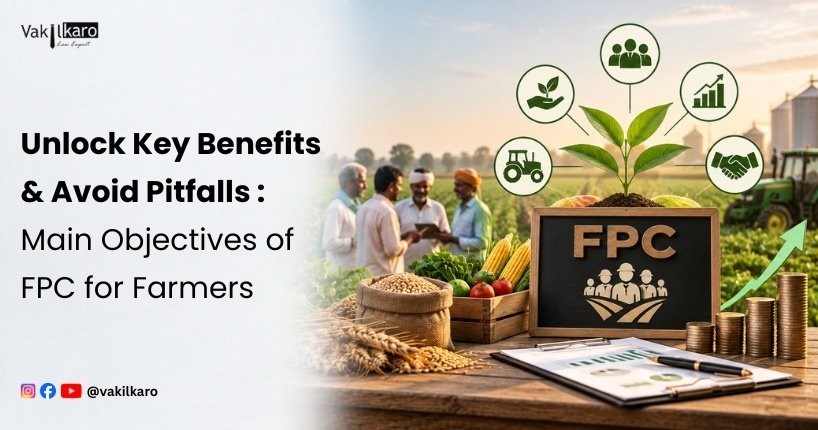
Unlock Key Benefits & Avoid Pitfalls: Main Objectives of FPC for Farmers
Farmer Producer Companies (FPCs) are designed to empower small and marginal farmers by enabling them to operate as a collective business entity. They offer the benefits of both a cooperative and a corporate structure. The primary objectives of an FPC include collective production, value addition, ma
Minimum Farmers to Start FPC: Avoid Pitfalls, Unlock Big Benefits
India’s agriculture sector is evolving with initiatives like the Farmer Producer Company (FPC) model, designed to empower small and marginal farmers through collective enterprise. Legally, a minimum of 10 farmers or 2 producer institutions can register an FPC under the Companies Act, 2013, governed
 Business Registrations
Unsure Who Can Form a Farmer Producer Company? Discover the Powerful Criteria
India’s agricultural sector is rapidly evolving, with Farmer Producer Companies (FPCs) emerging as a powerful model to uplift small and marginal farmers. FPCs allow farmers to operate collectively as formal business entities while enjoying the benefits of limited liability and professional governanc
Unsure About Farmer Producer Company Registration? Learn the Exact Law
Farmer Producer Companies (FPCs) are registered under Part IXA of the Companies Act, 1956, regulated by the Ministry of Corporate Affairs (MCA). Designed to empower small farmers, FPCs merge cooperative principles with corporate structure. This guide covers the legal framework, registration process,
Bylaws Trouble? Instant Solution Nationalized/International Bank Limits
Financial governance through bylaws is crucial when setting up an NGO or a Section 8 company. If your bylaws restrict bank accounts to only nationalized or international banks, it may hinder operational flexibility, especially with private banks offering better services today. However, using a priva
Effective Power Roles Revealed and Challenges: KMPs, CEO, CFO, and CS
Appointing Key Managerial Personnel (KMP) like the CEO, CFO, and Company Secretary is crucial for strong governance in a Private Limited Company (Pvt Ltd). While not mandatory for all, many companies choose to appoint KMPs to ensure compliance with the Companies Act, 2013, and improve operational ef
Ultimate Board Meetings Impact: Powerful Schedule, Purpose and Vision
Board Meetings are a legal and strategic necessity for every Private Limited Company (Pvt Ltd). As per the Companies Act, the first board meeting must occur within 30 days of Company registration, followed by at least four annually, with no more than 120 days between them. These meetings drive corpo