Learning Centre
From the Vakilkaro blog
Practical guides on registration, trademark, tax, NGO and compliance — written and reviewed by our legal team.
What Are the Tax Benefits for Donating to NGOs in India?
Donating to a Non-Governmental Organization (NGO) in India is not just an act of goodwill but also a financially beneficial decision. The Indian government provides tax benefits to individuals and businesses that contribute to registered NGOs, promoting charitable giving while ensuring transparency.
 Business Registrations
How to Ensure Transparency and Accountability in NGOs?
Ensuring transparency and accountability in NGOs is essential for credibility, donor trust, and legal compliance. NGOs should prioritize proper governance, financial audits, and ethical fundraising. Legal frameworks, including NGO registration, Section 8 company registration, and 12A and 80G registr
The Role of NGOs in India's Development
Non-Governmental Organizations (NGOs) play a crucial role in India's progress by addressing social, economic, and environmental challenges. They support marginalized communities, promote education, improve healthcare, and drive sustainable development. To operate effectively and secure funding, NGOs
 Business Registrations
How Do NGOs Contribute to Education in India?
NGOs play a crucial role in improving education in India by providing learning opportunities to underprivileged children, promoting literacy, and reducing dropout rates. They establish schools, run vocational training programs, and advocate for educational reforms. Proper NGO registration, Section 8
What Are the Challenges Faced by NGOs in India?
NGOs in India play a crucial role in addressing social, economic, and environmental challenges but face multiple hurdles in their operations. Financial constraints, legal compliance, and bureaucratic delays often hinder their growth. Proper NGO registration, Section 8 Company registration, and 12A a
 Business Registrations
How Can One Volunteer for an NGO in India?
Volunteering for an NGO in India is a rewarding way to contribute to social causes while gaining valuable experience. NGOs work in diverse fields like education, healthcare, and environmental conservation, often operating under legal frameworks such as NGO registration, Section 8 Company registratio
 Business Registrations
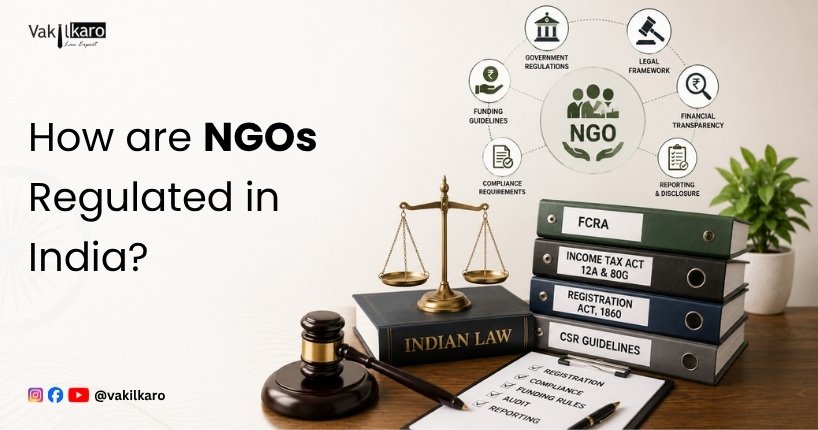
How are NGOs Regulated in India?
India has a vast network of NGOs addressing social, economic, and environmental challenges. They operate as trusts, societies, or Section 8 companies, each requiring proper NGO registration. Section 8 companies, governed by the Companies Act, 2013, offer legal credibility and tax benefits through 12
Trusts and Their Eligibility to Receive CSR Funds
Trusts play a vital role in social welfare, often relying on Corporate Social Responsibility (CSR) funds to scale their impact. To qualify for CSR contributions, trusts must meet legal and tax requirements, such as registration under the Indian Trusts Act, Section 8, and 12A for tax exemptions. Addi
 Business Registrations
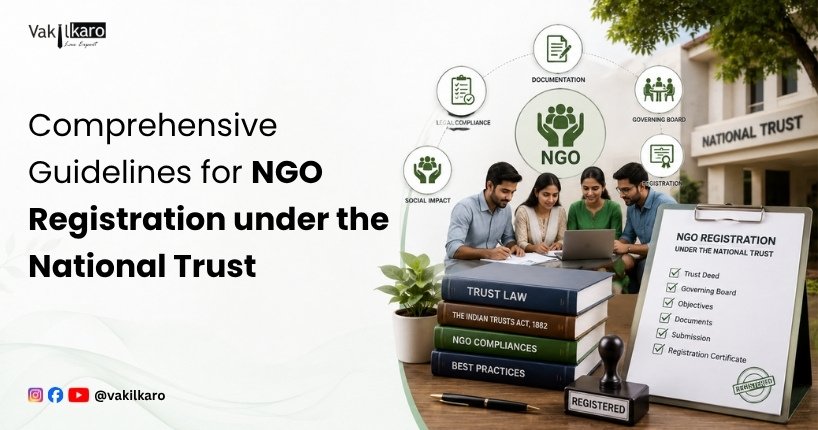
Comprehensive Guidelines for NGO Registration under the National Trust
Registering an NGO with the National Trust is crucial for organizations that support individuals with disabilities. The process now requires only the online submission of scanned documents. Eligible NGOs must serve individuals with autism, cerebral palsy, intellectual disabilities, or multiple disab
 Business Registrations
Appointment of Director to Your Private Limited Company
Appointing a director in a Private Limited Company is crucial for governance, compliance, and business growth. Directors manage company affairs, ensure statutory compliance, and safeguard shareholder interests. A company must have at least two directors, with options to appoint more based on needs.
What Are the Types of NGOs in India?
Non-Governmental Organizations (NGOs) play a vital role in social development, addressing various causes such as education, healthcare, poverty alleviation, and environmental sustainability. In India, NGOs exist in multiple forms, including trusts, societies, and Section 8 Companies, each with disti
 Business Registrations
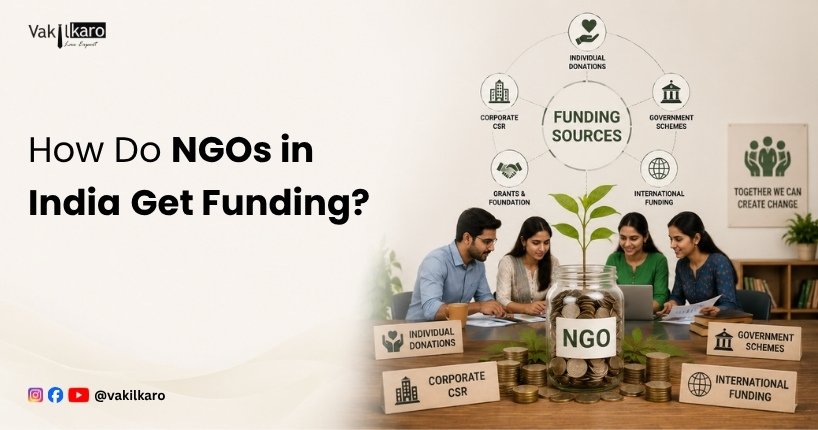
How Do NGOs in India Get Funding?
NGOs in India play a vital role in addressing social issues but require sustainable funding to operate effectively. Various sources of funding include government grants, corporate CSR contributions, foreign donations, crowdfunding, and individual philanthropy. To access these funds, NGOs must ensure
 Business Registrations
The Dark Side of Provisional Registration U/s 12A and 80G of the Income Tax Act, 1961
Non-Governmental Organizations (NGOs) play a crucial role in addressing social and economic issues. To support them, the government provides tax exemptions under Section 12A and 80G of the Income Tax Act, 1961. These provisions enable NGOs to receive tax benefits and attract donors by offering deduc
How an NGO Can Increase Its Chances of Success with CSR Funding
Non-Governmental Organizations (NGOs) play a crucial role in addressing societal challenges such as education, healthcare, and poverty alleviation. Securing Corporate Social Responsibility (CSR) funding is essential for sustaining their impact. Companies allocate a portion of their profits for socia
 Business Registrations
MCA Form CSR-1 Registration: A New Way to Get Funding for Your NGO
MCA Form CSR-1 registration is essential for NGOs seeking corporate funding and tax benefits. This mandatory registration, introduced by the Ministry of Corporate Affairs, ensures that NGOs comply with the Income Tax Act and corporate governance standards. To maximize CSR funding opportunities, NGOs
 Business Registrations
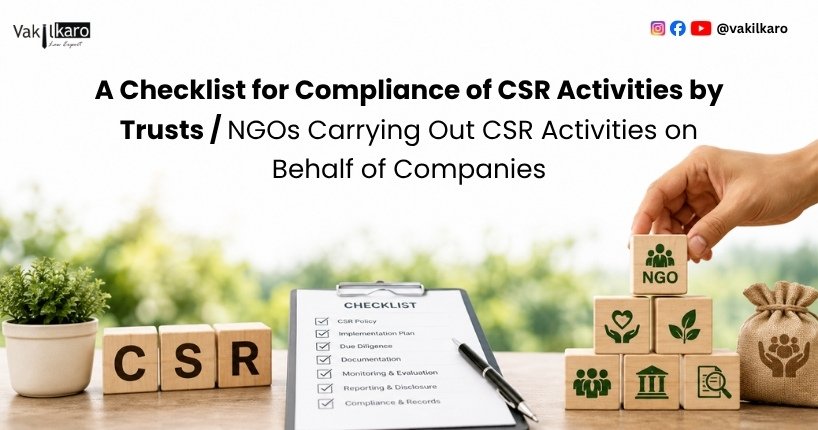
A Checklist for Compliance of CSR Activities by Trusts / NGOs Carrying Out CSR Activities on Behalf of Companies
NGOs and Trusts conducting CSR activities for corporations must adhere to a compliance checklist to ensure legal and tax obligations are met. This includes registering under the correct legal structure, such as Section 8 companies or trusts, obtaining CSR-1 registration, and ensuring 12A and 80G cer
Ways NGOs Can Get CSR Funds for Their Projects
NGOs play a vital role in addressing social issues, but they need funding to sustain their projects. One reliable source of funding is Corporate Social Responsibility (CSR) contributions. To qualify for CSR funds, NGOs must meet legal and tax-related requirements, including NGO registration under th
Tax on Capital Gain on Sale of Assets by Charitable Trust/NGO
Non-Governmental Organizations (NGOs) and charitable trusts may be subject to capital gains tax when selling assets, such as property or securities. The tax depends on the asset’s holding period, with short-term capital gains taxed at a higher rate than long-term gains. However, NGOs registered unde
Not All Sale of Goods by NGOs are Subject to GST
Non-Governmental Organizations (NGOs) play a vital role in social welfare, offering goods and services to support charitable activities. However, taxation concerns arise regarding income tax, GST, tax exemption, and sales tax. Not all NGO sales attract GST; exemptions apply if revenue is used solely
Section 25 Companies, Charitable Trusts, NGOs, and Societies under the Purview of Prevention of Money Laundering Act (PMLA) 2002
The Prevention of Money Laundering Act (PMLA) 2002 aims to combat money laundering and ensure transparency within financial transactions, including those carried out by charitable institutions. This act applies to various entities, such as Section 25 Companies, charitable trusts, NGOs, and societies
How to Establish a Charitable Company/NGO in India Through Foreign Funding
Establishing a charitable NGO or company in India with foreign funding requires careful planning and legal compliance. Key steps include selecting the right entity, such as a Section 8 company, and registering under the Foreign Contribution (Regulation) Act (FCRA) to receive foreign donations. NGOs
Short Guide on Legal Issues Involved with NGOs in India
Non-Governmental Organizations (NGOs) in India play a vital role in areas like education, healthcare, and poverty alleviation. As non-profit entities, they must comply with various legal frameworks and tax guidelines to operate effectively. NGOs can take legal forms such as Section 8 Companies, Trus
 Business Registrations
Mandatory Re-Registration Under Section 12A and 80G of the Income Tax Act
Non-Governmental Organizations (NGOs) play a crucial role in addressing social issues like education and healthcare. To support their work, the Indian government provides tax exemptions under Section 12A and 80G of the Income Tax Act. However, recent amendments require all NGOs to undergo mandatory
TDS Implications on NGOs: Understanding Tax Deduction at Source for Non-Profit Organizations
Non-Governmental Organizations (NGOs) must comply with Tax Deduction at Source (TDS) provisions under the Income Tax Act despite their non-profit status. TDS applies to salaries, rent, professional fees, and contractor payments. NGOs with 12A and 80G registration can avail tax exemptions but must st